
In 1931, Aldous Huxley gave us Brave New World and later, in essay form, Brave New World Revisited, describing a lazy populace that would be entertained into slumber and would be too amused to read.
In his book 1984, George Orwell reveals a dire and depressing future where totalitarian and tyrannical methods subjugate the mind and enslave thought. Catchy phrases like “big brother” and “newspeak” entered the lexicon, and the word Orwellian became synonymous with regulations and censorship.
When offered in either text or optics, the future is dystopian and dark, or scientific and shiny. Neil Postman’s Amusing Ourselves to Death, written in 1985, landed on the side of Huxley and conceded that we are indeed a populace that receives news through the lens of entertainment. Thus, the packaging of information has now been relegated to what I will call Toxic Tolerance.
A New World
Ninety years after Huxley, seventy after Orwell, and thirty-five years after Postman, we sit on the crux of a new world. A world that has succumbed to manufactured fears and a people who consume with rapidity, fiction as fact. This insanity that has enveloped us is not forced on the unsuspecting like an overnight leak at Chernobyl. Instead, it is akin to eating genetically modified hybrid grains for health reasons and succumbing to the pesticides that allow the hybrid to thrive.
The last forty years have seen intolerance rise faster than when the Romanovs of Russia saw defeat in a revolution. The irony of the replacement, even to the Russian peasant, is that what came as hope became chains of communism that lasted for seventy-five years.
Churchill’s words of pride to a battle–beleaguered people who had to rise once more to preserve Britain inspired a nation. Mahatma Gandhi challenged the imperialism of Great Britain and brought two hundred years of colonialism to its knees with words of non-violence. Ronald Reagan’s shining city on a hill speech motivated forty-nine of the fifty states to vote for him when he used terms of unity. Throughout human history, the rise and fall of empires and enterprises hinged on words. Words like hope, tolerance, tranquility, transformation, and pride shaped humanity.
Two Sides to the Story
The killing fields of Cambodia, the gas chambers of Auschwitz, the Gulags of Russia, and the tribal genocide of Rwanda all happened in the same world that eradicated polio, transplanted a human heart, and saw a man walk on the moon. The tragedy and travesty of unfettered evil have co-existed with the triumph of good.
We wake every day and say live and let live. Easier said than done. If we can co-exist, why does the headline always point to hate, and the news always starts with hopelessness? Because we have chosen a new game without rules, for rules would determine a score, and a score would decide who wins. The best way to not have a score is to allow the players to play without rules. The only way to not have accountability is to redefine the game and label competition evil. Not just unfair but evil.
King David, a man after God’s own heart, is only referenced because of his choice on the balcony of boredom and never the one confronted with the need to repent. The convenience of going from sin to sanctification without repentance is the new offering.
Toxic Tolerance
Even the houses of worship that have to offer the delineation between right and wrong have chosen to alter the threshold of tolerance by accusing those who do not want to dilute morality and branding them as intolerant. The question is no longer what is right but how much wrong can be tolerated. Therein we arrive at a boundary–less thought process that gives more rights to perpetrators than the victims and has a rule book without cover, spine, or table of contents. And we have the gall and nerve to call this rudderless voyage tolerance.
You do not tolerate a storm on the ocean; you navigate it with instrumentation that measures gale, gust, depth, and direction. You do not accept a volcano that is about to erupt; you evacuate when you see the first plume of ash in the distance. You do not tolerate the hurricane by giving insane rhetoric on how white supremacy contributes to global warming; you board up your windows.
Toxic tolerance is rooted deeply in the human obsession with knowing how to change direction without ever realizing why the detour was necessary to get to the place we are.
How Then Shall We Live?
In the words of Francis Schaffer—how then shall we live? The answer lies in a combination of Huxley, Orwell, and Postman. There is nothing wrong with entertainment if you realize it is entertainment. Listening to the purveyors and prognosticators who offer change should be taken with a pinch of salt and a barrel of skepticism.
It is not essential that they know which year Madam Curie won the Nobel Prize for Physics or Chemistry or that she did indeed win a Nobel Prize in both. They don’t have to know the hatred Hitler had for the Jewish people. It is not a fundamental prerequisite that they know that Indonesia was a Dutch Colony.
But for all that is holy and decent, they should know the name of their country’s capital city before they hold up signs of revolt where the word justice is misspelled.
Toxic tolerance has gone haywire because it is not enough that you are tolerant—you now have to be vocal in your antagonism to what you oppose. It is never okay to say you disagree; it is now imperative that you march and shout so that you are accepted as a visible fool of cacophony and ignorance. Maybe the only way to overcome this toxicity is to ensure that every parade has a mirror and every protest a replay. Free speech has limits, like not being able to shout fire in a crowded theater for the damage the stampede could cause. Stop defending those who do not ask for your help, and try not to become a solution when you are the problem and not the solution.
These opinions of mine are neither toxic nor tolerant—they are just opinions. Like heads, hands, and hearts, we all have thoughts. Use them for tolerance and do not abuse them with toxicity.

Krish Dhanam
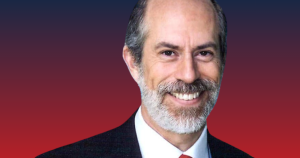
Krish Dhanam was born in India and finished his formal education with an MBA at the Institute of Management Technology. Equipped with that learning he migrated to the US in 1986 with his bride Anila. Krish joined the Ziglar Corporation in 1991 as a telemarketer and eventually became their Vice President of Global Operations.
Krish is a twenty year veteran of Patriot Academy leadership congresses and now joins the Patriot Academy team as the Dean of the Patriot Institute.